

Toggl
The time tracker millions trust. Now built to answer what's next.
Last updated: . For recent data, use our API.
Overview
Toggl was founded in 2006 in Tallinn, Estonia, as a consultancy that built its own timer before becoming a software company. Every capacity view, profitability report, and planning decision is only as good as the time data underneath it. Toggl starts there: the #1 rated time tracker for ease of use, with automated capture, a browser extension that works on the tools your team already uses, and 100% anti-surveillance.
That data doesn't just sit in a report; it answers questions. Every workload, profitability, and billing answer lives in Toggl, not spreadsheets. Project dashboards, utilization, workload, billable vs. non-billable, estimated vs. actuals, all shareable with a client or leadership without touching clunky analytics toold or spending a Friday rebuilding a report that should already exist. The platform brings together the products previously known as Toggl Track and Toggl Plan, with boards, timelines, Gantt charts and a calendar planner for project work. It runs on web, desktop, mobile and browser extensions, integrates with tools such as Jira, Asana, Notion and Slack, and offers an API and an MCP server.
And when the next request comes in (aka "can we take this on?") you don't scope it from memory. Toggl connects your past projects to your next estimate, showing in real time who has capacity, who's overbooked, and what saying yes actually costs your team.
This is time intelligence: your time data working harder, across capacity, profitability, and planning, not just tracked...but put to use. We're trusted by agencies, consultancies, and professional services teams who need time to answer real business questions, plus software teams, law firms, and finance teams who run on the same principle: know, don't guess. The company is bootstrapped and privately owned, and its team of about 90 people has worked fully remotely since 2014. It is independently audited for SOC 2 Type II and ISO 27001 and does not offer screenshots, keystroke logging or webcam tracking.
Office locations

Similar companies
- BufferTechnology, Information and Internet · San Francisco, CA
- TodoistSoftware Development
- ZapierSoftware Development · San Francisco, CA
- AutomatticSoftware Development
- SafetyWingTechnology, Information and Internet
- GitLabIT Services and IT Consulting · San Francisco, California
- TestGorillaHuman Resources Services · Amsterdam, North Holland
- RemoteHuman Resources Services · San Francisco, CA
- Oyster®Human Resources Services
- DuckDuckGoSoftware Development · Paoli, PA
Latest videos from Toggl on YouTube
 Jira Integration in Toggl
 Capacity Management Add-on in Toggl
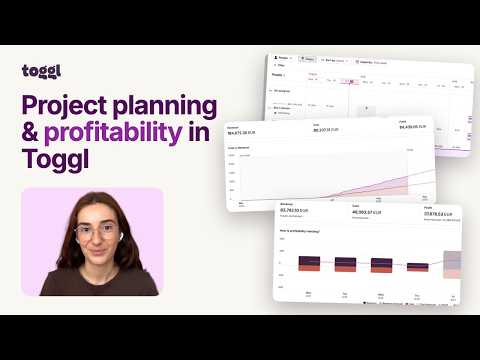 Project Planning and Profitability in Toggl
 Demo of the new Toggl for Toggl Track users
Recent posts from the Toggl blog
- A new project request lands.
Someone asks: “Can we take this on?” 🫣 You open a spreadsheet, scan a few calendars, and give it your best guess. The Capacity Management Add-on for Toggl gives you a better answer: your team’s real availability, weeks and months ahead. → See who has room next month and next quarter, not just this week → Group your plan by team and rebalance work before anyone burns out → Pencil in the pitch you haven’t won yet and see how it would land → Forecast workload, utilization and margins from scheduled and draft work → Plan around holidays in 250 countries, plus your own office closures “Can we take this on?”
- We're at Atlassian Team '26 in Amsterdam today.
Come to booth 114 to say hi. 👋 If you lead a team, you've probably made a resourcing call on a gut feeling and hoped it was right.