B2B data vendors will likely tell you their data is "high quality." What they won't tell you is what that means when their enrichment data starts flowing through your actual systems.
If you're a data engineer supporting GTM infrastructure, you already know the problem. Accuracy percentages and record counts don't tell you what breaks when enrichment data hits your CRM, warehouse, or reverse ETL pipeline. Theoretical correctness and predictable behavior under automation are different things, and only one of them breaks your pipeline.
Here's a practical framework for vetting any B2B data vendor before their data becomes part of your revenue infrastructure.
Start with trade-offs, not quality scores
Instead of asking "How accurate is your data?", ask what the vendor optimizes for and what they knowingly sacrifice.
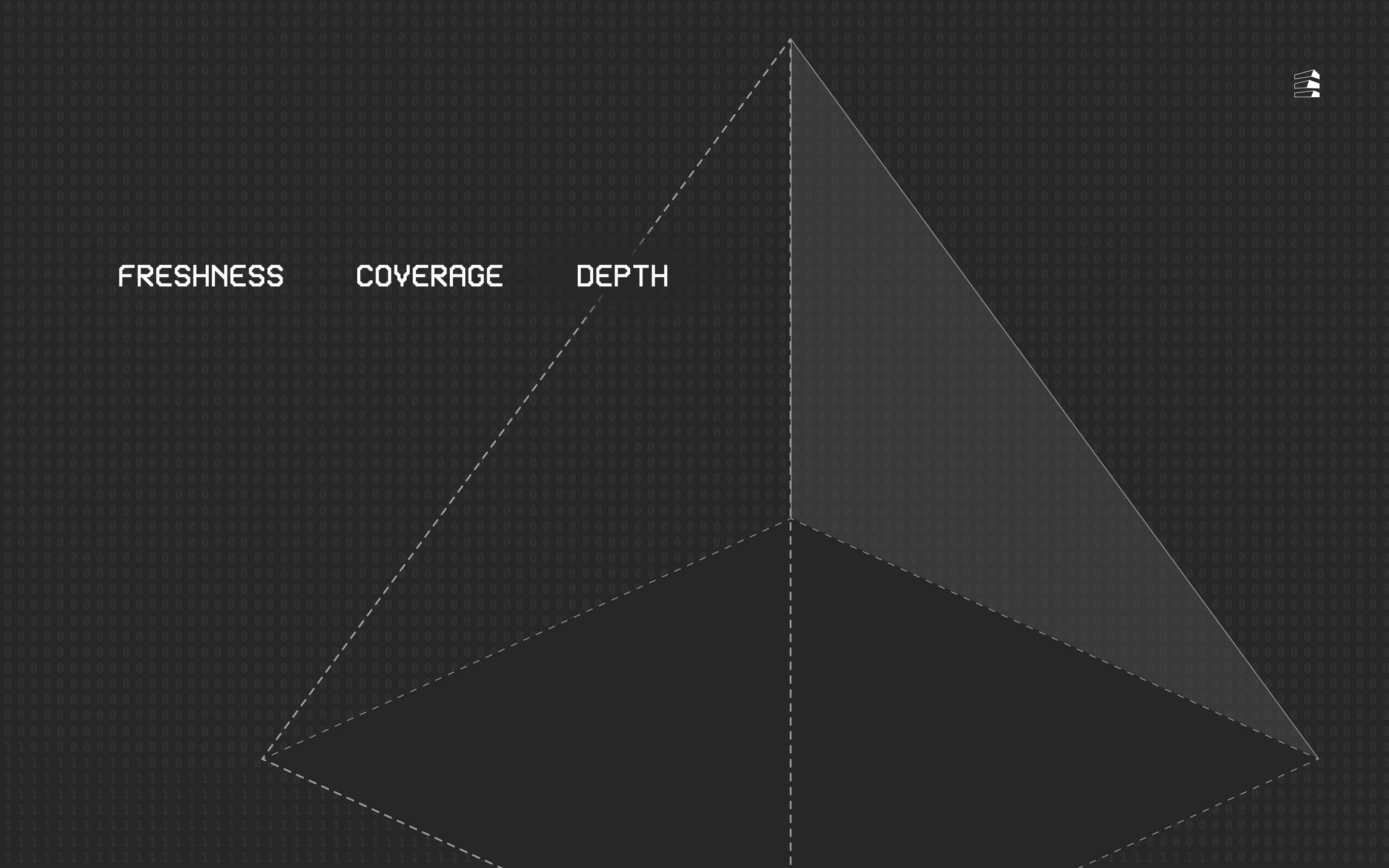
Every data provider makes trade-offs:
coverage versus freshness
breadth of attributes versus depth of validation
static snapshots versus continuous updates
If a vendor can't clearly articulate these trade-offs, they're still making them. They're just not documenting them.
Undocumented trade-offs end up embedded in your routing, scoring, and attribution. These become choices no one on your team actually made. A credible vendor can explain their optimization choices in plain terms and tell you exactly where those choices break down.
Inspect how identity matching works before you look at any fields
Identity resolution — matching and merging records from multiple sources into a single profile — is where B2B enrichment failures are most common and hardest to trace. They don't announce themselves as vendor problems. They surface in your systems as CRM issues weeks later.
To evaluate it, ask specifically about these patterns:
duplicate contacts inflating funnel metrics
one person associated with multiple accounts after a job change
contractors classified as decision-makers
account hierarchies breaking downstream reporting
The underlying process is inherently probabilistic. If a vendor presents it as deterministic, they're likely collapsing edge cases rather than reconciling them. Many enrichment failures don't start with bad records — they start with joins.
Separate decorative fields from decision-grade signals
The useful question is which attributes the vendor stands behind enough to automate on.
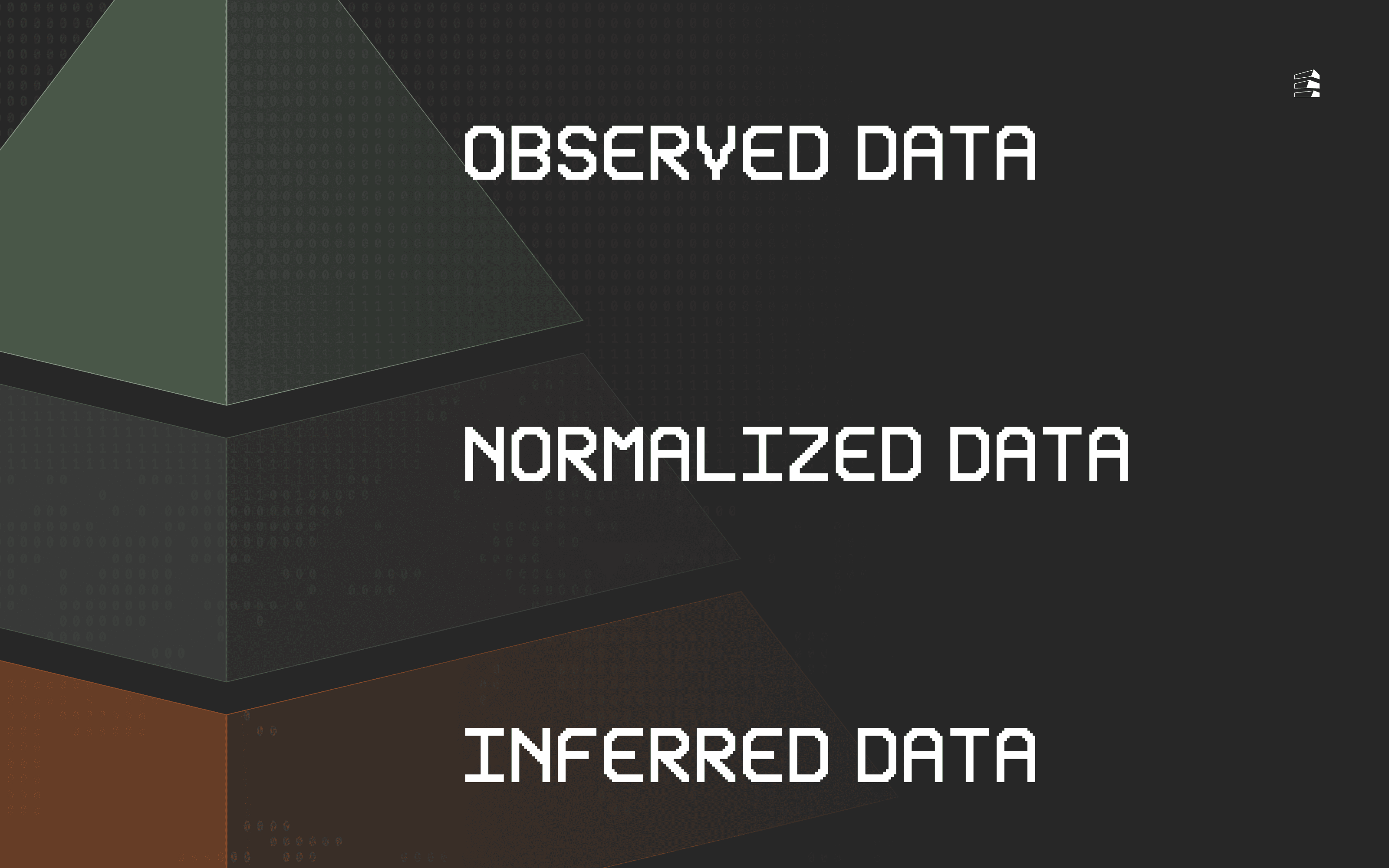
Observed fields are recorded directly from a source, like a job title pulled from a public profile. Normalized fields are standardized versions of observed data (that same title mapped to a seniority tier). Inferred fields are modeled outputs — attributes the vendor derived rather than found.
Look for clear distinctions between these three. Titles, seniority, role scope, and firmographics are often inferred or modeled, even when they're presented as straightforward attributes.
This matters because inferred fields carry outsized risk in GTM workflows. A small error in seniority classification can propagate through lead scoring, routing, and prioritization logic faster than a raw data error.
A good vendor will tell you which fields are safe for filtering, which can be used for scoring, and which should be treated as contextual signals rather than hard logic inputs.
Enrichment timing matters as much as method
A lead routed incorrectly for two weeks is often worse than a lead that's never been enriched. The variable behind that is timing — whether enrichment happens at ingest, on a schedule, or continuously — and how long incorrect data can persist before the system corrects it.
For GTM systems, latency tolerance matters more than theoretical freshness. Ask what the correction window looks like in practice, not just what the update frequency is.
If enrichment timing isn't clearly documented, you'll end up guessing. That guess will eventually turn into a cron job that nobody fully trusts.
Treat documented limitations as a positive signal
Look for explicit documentation around known gaps, edge cases, coverage caveats, and sourcing boundaries. A high-quality vendor should publish what their data doesn't cover in order to reduce incident response time when something behaves unexpectedly.
The most painful enrichment failures happen when behavior that feels like a bug turns out to be "expected" but was never stated. A vendor that only publishes capabilities is optimizing for sales conversations, not production use.
Evaluate usability under schema pressure
Assess schema consistency over time, field naming stability, and how often transformations are required to keep data usable in CRMs and downstream tools. Correct data that's difficult to use is still low-quality data, and GTM systems are particularly sensitive to schema drift because dashboards, workflows, and picklists tend to encode assumptions.
Also ask how often schemas change, how changes are communicated, and whether backward compatibility is considered. If the answer is vague, you can expect breakage during routine updates.
Use a verification checklist
When validating a vendor, ask a small number of verifiable questions:
Are optimization trade-offs stated clearly?
Is identity matching and conflict resolution documented?
Are signal-bearing fields distinguished from raw attributes?
Is enrichment timing explicit?
Are limitations published at the field or dataset level?
Is the schema stable enough to automate against?
For each item, the test is simple: Can the vendor show you where this is documented?
Quality shows up under pressure
Predictability matters more than perfection when you're running GTM enrichment in production.
The vendors that hold up in production make it easy to understand how their data behaves when assumptions are violated, records conflict, or systems change. They surface trade-offs explicitly instead of burying them in aggregate match rates.
If a vendor makes it hard to answer basic evaluation questions before integration, that difficulty won't disappear after launch. It'll just surface later, under pressure, in places that are harder to fix.